The Tape Is Dying Faster Than Your Uncle: Rescuing Reel-to-Reel, MiniDisc, and 8-Track Recordings Before It's Too Late
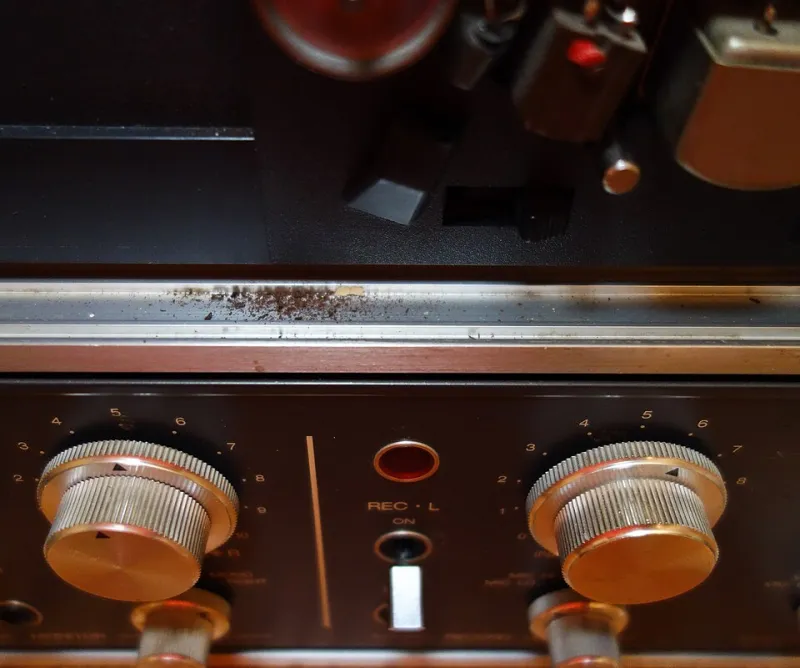
Photo: Danielteolijr, CC BY-SA 4.0, via Wikimedia Commons
Somewhere in America, probably within twenty miles of you, there's a basement shelf holding a format of music that exactly zero streaming services will ever carry. Maybe it's a reel of your uncle's bar band from 1974. Maybe it's a MiniDisc from a college radio show. Maybe it's an 8-track of a garage recording so obscure that Discogs has never heard of it.
Here's the uncomfortable truth: that music has an expiration date, and it's not a far-off one. The tape degrades. The machines that play it fail. And when both are gone, the recording is gone with them.
Why Nobody's Coming to Save These Tapes
Spotify doesn't want your uncle's reel-to-reel. There's no licensing deal, no metadata, no algorithm to feed. These recordings exist in exactly one place — the physical tape — and the population of machines that can play them shrinks every year. Reel-to-reel decks haven't been manufactured in quantity since the early 1980s. Working ones are getting picked apart for parts. DAT machines are even worse; the drives were never built to last and the heads wear out fast.
This is the strongest argument for actually owning your music that exists. A file on a cloud server is a lease. A tape in your basement is an asset — but only if you can still read it.
The formats, ranked by urgency
Reel-to-reel: The tape itself can last decades, but it suffers from a problem called sticky-shed syndrome — the binder breaks down and the tape literally gums up the playback heads. If a reel plays with a muffled, warbling sound, stop. Playing it further can shed oxide and destroy it. Baking the tape (yes, baking — a controlled low-temperature process) can temporarily restore it, but it's a one-shot deal.
DAT (Digital Audio Tape): The most urgent. These were a short-lived '80s and '90s format used heavily by studios and live tapers — Grateful Dead collectors, we're looking at you. The drives were fragile, and error correction hides degradation until it suddenly can't. A DAT that plays today may not play next year.
MiniDisc: More robust than people fear — it's a magneto-optical disc, not tape — but the players are proprietary, finicky, and increasingly rare. If you have a working MiniDisc deck, use it while it works.
8-track: The tapes are prone to jamming and the pads dry out, but the good news is that decent players are still cheap at estate sales and flea markets. Low urgency, low difficulty.
The DIY route: what you actually need
If the recordings matter but aren't precious one-of-a-kind masterpieces, you can do this yourself for less than the cost of a nice dinner out.
- Find a player. Garage sales, estate sales, eBay, and Facebook Marketplace are your friends. A working consumer reel-to-reel deck (a Teac or Sony) can go for $100–300. MiniDisc decks run $50–150. Don't buy the cheapest thing — a broken player wastes your one good playback.
- Get an audio interface. A basic USB interface like a Behringer U-Control or a Focusrite Scarlett Solo connects the player's line-out to your computer. Twenty to a hundred bucks.
- Capture the audio. Free software like Audacity records the output. Record at 24-bit if your interface allows it; you can always downconvert later, never up.
- Do one pass, carefully. Play the tape once, all the way through, while recording. Every pass adds wear. If there's a hiccup, you can edit it later — don't rewind and replay sections hunting for perfection.
- Clean up and save. Trim silences, maybe reduce hiss lightly, then save the result in two places: a lossless format (FLAC or WAV) on your computer and a backup on a thumb drive or external drive. This is where owning your music pays off — no subscription required, no catalog removal, no expiration.
Total damage: often under $200, and you now own a machine capable of rescuing more tapes later.
When to call a professional
Some jobs aren't DIY jobs. If the tape is one-of-a-kind — a family member's only recording, a deceased musician's demos, a wedding — and the reel shows signs of mold, damage, or sticky-shed, hand it to a transfer service. Expect $40–100 per reel, more for restoration. It sounds steep until you compare it to the alternative, which is never hearing it again.
A good pro has proper tape baking equipment, azimuth calibration, and playback decks worth more than your car. They also know how to handle the heartbreak scenarios, like a snapped tape, which can often be spliced with surprising success.
The ownership argument, one last time
Here's what rescuing these formats teaches you: music that lives on someone else's server isn't really yours. The whole streaming model works fine for the top 10,000 songs in the catalog. It completely fails for a reel of your uncle's band in a shoebox — and honestly, it fails for anything that falls out of fashion, too. Catalogs vanish. Licenses lapse.
Once you've digitized those tapes, do something the tape era never allowed: back the files up in three places, convert them to MP3s for the car, and burn the important stuff onto a USB drive for the family. The reel-to-reel generation would have killed for that kind of insurance.
The machines are dying. The tape is aging. The window is closing — but it hasn't closed yet. Go check the basement.