Grandma Doesn't Need Another Playlist: Building the Music Gift She'll Keep Forever
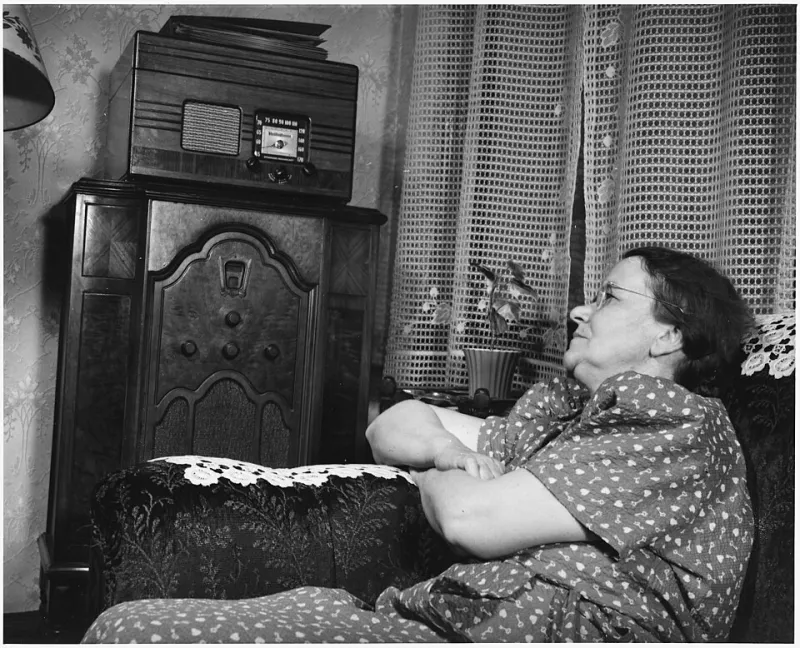
Photo: Unknown authorUnknown author or not provided, Public domain, via Wikimedia Commons
Every December, the same panic sets in. What do you get the person who insists they don't need anything? A streaming subscription is the obvious answer for a music lover — and honestly, it's the worst one. Grandma doesn't want to learn an app. She wants to press play and hear the Drifters.
So this year, build her a music gift that works like a mixtape and lasts like a photo album: a small, pre-loaded MP3 player or USB drive, organized with love and labeled like she's never touched a computer. Because she hasn't. Here's how to do it right.
Start With the Memories, Not the Songs
The magic of this gift isn't the music itself — it's the association. Before you download a single file, sit down (or call her up) and ask a few sneaky questions:
- What was playing at your wedding?
- What song was on the radio when you learned to drive?
- What did you and Grandpa dance to?
Write down every answer. Then build outward from there. If she mentioned "Blue Moon," pull the Marcels version and the Rodgers and Hart standard. If she grew up in Detroit, Motown isn't optional — it's the backbone. If she's from Texas, classic country earns its own folder.
The goal is a library that reads like her biography: first dances, church Sundays, road trips to see cousins in Ohio. That's what makes this a gift instead of a download.
Sourcing the Files Without Losing Your Mind
Here's the practical part nobody warns you about. Her favorites are scattered across eras, and some of them are hard to find on the usual services. Older recordings go in and out of availability constantly — a catalog can drop a whole decade of doo-wop overnight.
This is exactly the kind of situation where a YouTube-to-MP3 workflow earns its keep. Search for the original recording or a clean upload, convert it, and check the file before you commit. You're not building a bootleg empire here — you're preserving a handful of songs for one person's kitchen radio. Still, be a good steward: grab the best-quality source you can find, and for anything easily available on a legitimate store, buy it. It's usually a dollar.
Aim for 150 to 300 songs. That sounds like a lot, but at 3 minutes a pop it's a long weekend of tunes — and it fits on a drive that costs less than a pizza.
Label It Like She's Never Seen a Computer
Because she hasn't, and that's fine. The single biggest mistake people make with this gift is organizing it like a millennial. "Artist — Album — Track 07" means nothing to someone who thinks in decades and occasions.
Organize by feeling and memory instead:
- 01 – Dancing With Grandpa
- 02 – Sunday Mornings
- 03 – The High School Years
- 04 – Road Trip Songs
- 05 – Christmas, The Good Versions
Number the folders so they sort in the order you want her to hear them. Inside each one, name files plainly: "Patsy Cline – Crazy.mp3." No album tags, no live-at-somewhere-1962 nonsense.
Then do the analog part: write a tracklist by hand on an index card, or print one, and tuck it in the box. If you're gifting a cheap MP3 player, spend ten minutes figuring out the absolute simplest playback path — usually a big physical button and one folder — and write one-paragraph instructions in your best handwriting.
Pair It With Something She Already Uses
The drive alone is a gift for a techie. For a grandparent, it's a puzzle. So bundle it:
- A simple MP3 player with big buttons and a headphone jack
- A small Bluetooth speaker she can work with one switch
- A note explaining that her grandson or granddaughter loaded every song by hand
That last one matters more than you think. The note turns a gadget into a keepsake.
Why This Beats a Subscription Card
A streaming gift card is a bill she'll never open. It assumes she wants to manage music — browse, search, skip ads, remember a password. She doesn't. She wants to own it, the way she owned her records: permanently, simply, without asking permission.
There's a second reason, and it's the one we keep coming back to around here: streaming libraries shrink. Songs disappear. Licenses lapse. The 45s of her youth are mostly out of circulation, and the services treat them like inventory, not heritage. A file on a drive in her drawer doesn't care what a licensing department decides next quarter.
Owning music isn't nostalgia for nostalgia's sake. It's insurance for the songs that matter.
The Bonus She Won't Expect
Here's the sleeper hit of this whole project: make a second copy. Keep one drive at her house and one at yours, or tuck a copy into the family's emergency kit next to the flashlights. Music is memory, and memory deserves a backup.
Someday — not soon, but someday — that little drive with the handwritten label might be the most played thing in the whole family. Not because of the audio quality. Because somebody took the time to press play on her whole life.