The Gym Mixtape, The Wedding Gig, and The Gray Zone: A Plain-English Copyright Cheat Sheet

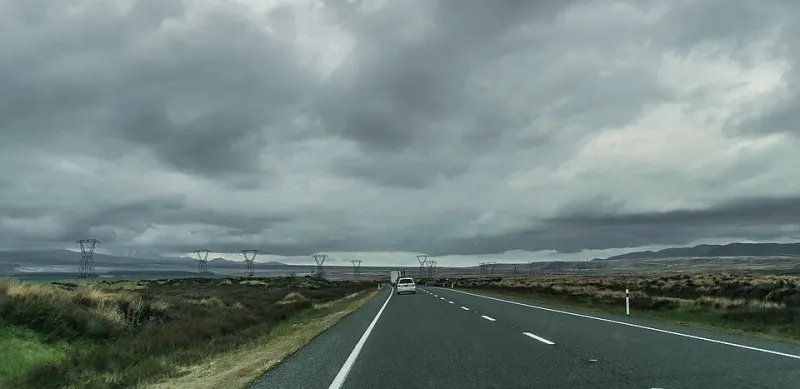
Photo: Judgefloro, CC0, via Wikimedia Commons
Picture This: You're Somewhere Outside Barstow
You've got a 12-hour drive to Denver, a phone full of downloaded MP3s, and a passenger asking a very reasonable question: "Wait, is this even legal?"
Short answer: for what you're doing right now — listening in your own car, on your own device — you're in about as safe a spot as copyright law allows. But the lines get blurrier fast, and it's worth knowing where they sit before you cross one.
The Core Idea: Personal Use vs. Distribution
American copyright law gives songwriters and performers control over how their work is copied and shared. The entire legal landscape for music hoarders boils down to one distinction:
Keeping it to yourself: generally fine. Sharing it with the world: where the trouble lives.
Ripping a CD you bought into MP3s so you can listen in the car? That's called format shifting, and while the law never gave it a glowing neon-green light, it's a widely accepted personal practice that nobody gets sued over. Saving a YouTube audio track for offline listening on your own devices sits in similar personal-use territory — the kind of thing tools like Y2MP3 Cloud are built around.
Uploading that same library to a file-sharing site so strangers can download it? That's distribution, and it's genuinely illegal. Same files, completely different ballgame.
Three Scenarios, Three Very Different Answers
Scenario 1: The Gym Mixtape
You build a 45-minute workout playlist and listen through your own earbuds. Totally fine. You're a person consuming music, which is the entire point of copyright's existence. Now, if you distribute that playlist file to your whole gym via a shared Dropbox link, you've drifted into unauthorized distribution territory. Listening: legal. Handing out copies: not.
Scenario 2: The Wedding DJ Gig
Here's where casual users get burned. The moment you play music to a group at an event — even if you're not charging — you've entered public performance territory. Venues like hotels and event halls typically carry blanket licenses from ASCAP and BMI that cover this, which is why wedding DJs operate the way they do. If you're DJing a friend's backyard wedding, the risk is real but the practical enforcement is near zero. If you're doing it as a business, get your own licensing sorted or book venues that carry coverage.
Scenario 3: The Road Trip Playlist
Downloading tracks for personal offline listening before a drive through cell-dead stretches of Nevada or the UP of Michigan? This is the heartland of safe personal use. Format-shifted copies on your own device, for your own ears, no sharing — this is the classic scenario copyright law's personal-use spirit was designed to accommodate.
What About "Fair Use"?
People toss this phrase around like a magic spell. It isn't one. Fair use is a legal defense — meaning you argue it in court after being sued — built on four factors: purpose, nature, amount, and market effect. Personal backups usually don't even need to invoke it; they're simply low-priority, tolerated personal-use activity. Fair use matters more for commentary, criticism, sampling, and parody. Don't lean on it as a shield for distribution. It won't hold.
The Quick Reference Card
- Listen on your own devices, anywhere: ✅ Safe
- Rip your own CDs, convert files for offline use: ✅ Accepted personal use
- Keep backup copies for yourself: ✅ Fine
- Share files or playlists for download: ❌ Distribution — don't
- Sell burned CDs or flash drives: ❌ Absolutely not
- Play music publicly at events: ⚠️ Depends on venue licensing
The Bottom Line
The rule of thumb that keeps you out of trouble is beautifully simple: build your archive for an audience of one — you. The second files start moving to other people, especially for money, you've left the gray zone and entered the red one.
Now go enjoy Denver. The playlist's covered.